2025年10月17日
技術情報
1,417 文字
Next.js + FastAPIでAI開発:PrismaとSQLAlchemyのベストプラクティス
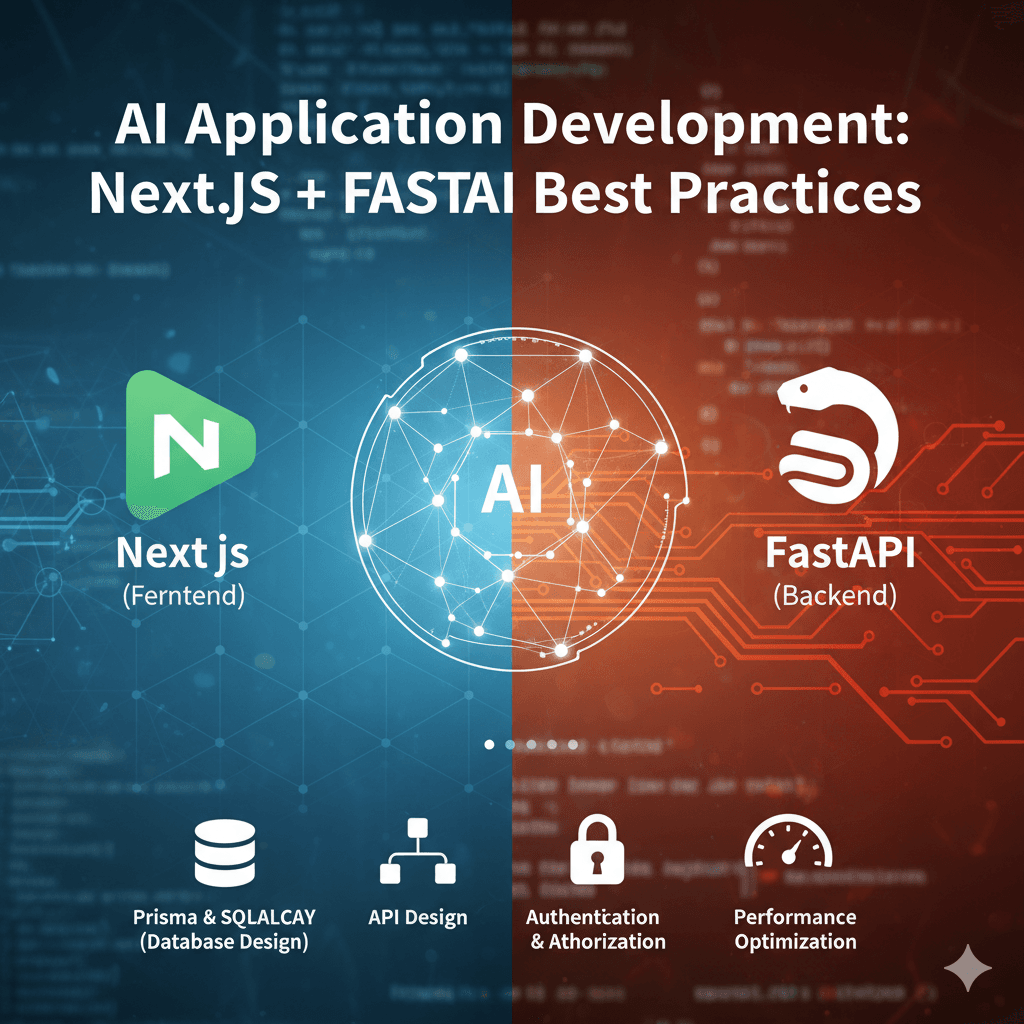
AIアプリケーション開発において、Next.js(フロントエンド)とFastAPI(バックエンド)の組み合わせが注目されている。PrismaとSQLAlchemyを使ったデータベース設計、API設計、認証・認可、パフォーマンス最適化のベストプラクティスを解説。
要約
AIアプリケーション開発において、フロントエンドにNext.js、バックエンドにFastAPIを使用する構成が広く採用されています。この組み合わせは、フロントエンドの高速なレンダリングと、バックエンドの柔軟なAPI開発を両立させ、特にAI機能を統合する際に大きなメリットを発揮します。本記事では、フロントエンドでPrisma、バックエンドでSQLAlchemyを使用した場合のベストプラクティスなシステム設計、データベース設計、API設計、認証・認可、パフォーマンス最適化のポイントを詳しく解説します。
なぜNext.js + FastAPIなのか?
AIアプリケーション開発でこの組み合わせが選ばれる理由は以下の通りです。
Next.jsの強み
- Reactベースのモダンなフレームワーク: コンポーネントベースの開発で保守性が高い
- SSR/SSG対応: サーバーサイドレンダリングと静的サイト生成でSEOとパフォーマンスを両立
- App Router: Next.js 13以降の新しいルーティングシステムで、ネストレイアウトやローディング状態管理が簡単
- TypeScript完全サポート: 型安全性の高い開発が可能
FastAPIの強み
- 高速なAPI開発: Pydanticによるデータ検証と自動ドキュメント生成
- 非同期処理: async/awaitで高パフォーマンスなAPIを実現
- Pythonエコシステム: AI/MLライブラリ(OpenAI、LangChain、Transformersなど)との連携が容易
- 自動ドキュメント: Swagger UIとReDocが自動生成されるOpenAPI仕様
システムアーキテクチャ
基本的なシステム構成は以下のようになります。
[ユーザー] <--> [Next.js Frontend]
                    |
                    | REST API / WebSocket
                    |
                    v
              [FastAPI Backend]
                    |
                    +-- [SQLAlchemy ORM]
                    |        |
                    |        v
                    |   [PostgreSQL]
                    |
                    +-- [AI Services]
                           |
                           +-- OpenAI API
                           +-- LangChain
                           +-- Vector DB (Pinecone/Weaviate)
データベース設計のベストプラクティス
Prisma vs SQLAlchemy: どちらを使うか
推奨構成:
- フロントエンド側: Prismaを使わない(Next.jsから直接DBアクセスしない)
- バックエンド側: SQLAlchemyをメインに使用
- スキーマ管理: Alembic(SQLAlchemy用)でマイグレーション管理
ただし、以下のようなケースではPrismaを併用することも検討できます:
Prismaを使うメリット:
- TypeScriptファーストで型安全性が高い
- Prisma StudioでデータをGUIで管理できる
- Next.jsのServer ActionsやAPI Routesで直接DBアクセスする場合に便利
SQLAlchemyを使うメリット:
- PythonのAI/MLライブラリとの連携がスムーズ
- 複雑なクエリやトランザクション制御が得意
- FastAPIとの統合が優れている
SQLAlchemyでのモデル設計例
# backend/models/
user.py

from sqlalchemy import Column, String, DateTime, Boolean
from sqlalchemy.dialects.postgresql import UUID
from datetime import datetime
import uuid

from database import Base

class User(Base):
    __tablename__ = "users"

    id = Column(UUID(as_uuid=True), primary_key=True, default=uuid.uuid4)
    email = Column(String, unique=True, nullable=False, index=True)
    hashed_password = Column(String, nullable=False)
    full_name = Column(String)
    is_active = Column(Boolean, default=True)
    created_at = Column(DateTime, default=datetime.utcnow)
    updated_at = Column(DateTime, default=datetime.utcnow, onupdate=datetime.utcnow)

    # リレーション設定例
    # conversations = relationship("Conversation", back_populates="user")
# backend/models/
conversation.py

from sqlalchemy import Column, String, DateTime, ForeignKey, Text
from sqlalchemy.dialects.postgresql import UUID, JSONB
from sqlalchemy.orm import relationship
from datetime import datetime
import uuid

from database import Base

class Conversation(Base):
    __tablename__ = "conversations"

    id = Column(UUID(as_uuid=True), primary_key=True, default=uuid.uuid4)
    user_id = Column(UUID(as_uuid=True), ForeignKey("
users.id
"), nullable=False)
    title = Column(String, nullable=False)
    created_at = Column(DateTime, default=datetime.utcnow)
    updated_at = Column(DateTime, default=datetime.utcnow, onupdate=datetime.utcnow)

    # AI用のメタデータをJSONBで保存
    metadata = Column(JSONB, default={})

    # リレーション
    user = relationship("User", back_populates="conversations")
    messages = relationship("Message", back_populates="conversation", cascade="all, delete-orphan")

class Message(Base):
    __tablename__ = "messages"

    id = Column(UUID(as_uuid=True), primary_key=True, default=uuid.uuid4)
    conversation_id = Column(UUID(as_uuid=True), ForeignKey("
conversations.id
"), nullable=False)
    role = Column(String, nullable=False)  # "user" or "assistant"
    content = Column(Text, nullable=False)
    created_at = Column(DateTime, default=datetime.utcnow)

    # AI生成情報をJSONBで保存
    ai_metadata = Column(JSONB, default={})  # token数、モデル名など

    conversation = relationship("Conversation", back_populates="messages")
データベース接続管理
# backend/
database.py

from sqlalchemy import create_engine
from sqlalchemy.ext.declarative import declarative_base
from sqlalchemy.orm import sessionmaker
from contextlib import contextmanager
import os

DATABASE_URL = os.getenv("DATABASE_URL")

# 非同期用のエンジン
from sqlalchemy.ext.asyncio import create_async_engine, AsyncSession

engine = create_async_engine(
    DATABASE_URL,
    echo=True,  # 開発環境ではTrue、本番ではFalse
    pool_size=20,
    max_overflow=0,
    pool_pre_ping=True,  # 接続の有効性を確認
)

AsyncSessionLocal = sessionmaker(
    engine, class_=AsyncSession, expire_on_commit=False
)

Base = declarative_base()

# 依存性注入用
from fastapi import Depends
from sqlalchemy.ext.asyncio import AsyncSession

async def get_db() -> AsyncSession:
    async with AsyncSessionLocal() as session:
        try:
            yield session
        finally:
            await session.close()
FastAPIでのAPI設計
ベストプラクティスなAPI構造
# backend/
main.py

from fastapi import FastAPI
from fastapi.middleware.cors import CORSMiddleware
import uvicorn

app = FastAPI(
    title="AI Application API",
    description="Next.js + FastAPI AI Application",
    version="1.0.0"
)

# CORS設定
app.add_middleware(
    CORSMiddleware,
    allow_origins=["
http://localhost:3000
"],  # Next.jsのデフォルトポート
    allow_credentials=True,
    allow_methods=["*"],
    allow_headers=["*"],
)

# ルーターの登録
from routers import auth, conversations, ai

app.include_router(auth.router, prefix="/api/auth", tags=["auth"])
app.include_router(conversations.router, prefix="/api/conversations", tags=["conversations"])
app.include_router(ai.router, prefix="/api/ai", tags=["ai"])

@app.get("/")
def read_root():
    return {"message": "AI Application API"}

if __name__ == "__main__":

uvicorn.run
("main:app", host="0.0.0.0", port=8000, reload=True)
Pydanticスキーマの定義
# backend/schemas/
conversation.py

from pydantic import BaseModel, Field
from datetime import datetime
from typing import Optional, List
from uuid import UUID

class MessageBase(BaseModel):
    role: str = Field(..., description="user or assistant")
    content: str

class MessageCreate(MessageBase):
    pass

class MessageResponse(MessageBase):
    id: UUID
    conversation_id: UUID
    created_at: datetime

    class Config:
        from_attributes = True

class ConversationBase(BaseModel):
    title: str

class ConversationCreate(ConversationBase):
    pass

class ConversationResponse(ConversationBase):
    id: UUID
    user_id: UUID
    created_at: datetime
    updated_at: datetime
    messages: List[MessageResponse] = []

    class Config:
        from_attributes = True
ルーターの実装
# backend/routers/
conversations.py

from fastapi import APIRouter, Depends, HTTPException
from sqlalchemy.ext.asyncio import AsyncSession
from sqlalchemy import select
from typing import List
from uuid import UUID

from database import get_db
from models.conversation import Conversation, Message
from schemas.conversation import ConversationCreate, ConversationResponse
from auth.dependencies import get_current_user

router = APIRouter()

@
router.post
("/", response_model=ConversationResponse)
async def create_conversation(
    conversation: ConversationCreate,
    db: AsyncSession = Depends(get_db),
    current_user = Depends(get_current_user)
):
    db_conversation = Conversation(
        title=conversation.title,
        user_id=current_
user.id

    )
    db.add(db_conversation)
    await db.commit()
    await db.refresh(db_conversation)
    return db_conversation

@router.get("/", response_model=List[ConversationResponse])
async def list_conversations(
    db: AsyncSession = Depends(get_db),
    current_user = Depends(get_current_user)
):
    result = await db.execute(
        select(Conversation)
        .where(Conversation.user_id == current_
user.id
)
        .order_by(Conversation.updated_at.desc())
    )
    conversations = result.scalars().all()
    return conversations

@router.get("/{conversation_id}", response_model=ConversationResponse)
async def get_conversation(
    conversation_id: UUID,
    db: AsyncSession = Depends(get_db),
    current_user = Depends(get_current_user)
):
    result = await db.execute(
        select(Conversation)
        .where(
Conversation.id
 == conversation_id)
        .where(Conversation.user_id == current_
user.id
)
    )
    conversation = result.scalar_one_or_none()

    if not conversation:
        raise HTTPException(status_code=404, detail="Conversation not found")

    return conversation
AI機能の統合
OpenAI APIとの連携
# backend/routers/
ai.py

from fastapi import APIRouter, Depends, HTTPException
from fastapi.responses import StreamingResponse
from sqlalchemy.ext.asyncio import AsyncSession
import openai
import os
from typing import AsyncGenerator

from database import get_db
from models.conversation import Conversation, Message
from
schemas.ai
 import ChatRequest, ChatResponse
from auth.dependencies import get_current_user

router = APIRouter()
openai.api_key = os.getenv("OPENAI_API_KEY")

@
router.post
("/chat")
async def chat(
    request: ChatRequest,
    db: AsyncSession = Depends(get_db),
    current_user = Depends(get_current_user)
):
    # ユーザーメッセージを保存
    user_message = Message(
        conversation_id=request.conversation_id,
        role="user",
        content=request.message
    )
    db.add(user_message)
    await db.commit()

    # OpenAI API呼び出し
    try:
        response = await openai.ChatCompletion.acreate(
            model="gpt-4",
            messages=[
                {"role": "system", "content": "You are a helpful assistant."},
                {"role": "user", "content": request.message}
            ],
            temperature=0.7,
        )

        assistant_content = response.choices[0].message.content

        # AIメッセージを保存
        assistant_message = Message(
            conversation_id=request.conversation_id,
            role="assistant",
            content=assistant_content,
            ai_metadata={
                "model": "gpt-4",
                "tokens":
response.usage.total
_tokens
            }
        )
        db.add(assistant_message)
        await db.commit()

        return ChatResponse(message=assistant_content)

    except Exception as e:
        raise HTTPException(status_code=500, detail=str(e))

@
router.post
("/chat/stream")
async def chat_stream(
    request: ChatRequest,
    db: AsyncSession = Depends(get_db),
    current_user = Depends(get_current_user)
):
    async def generate() -> AsyncGenerator[str, None]:
        response = await openai.ChatCompletion.acreate(
            model="gpt-4",
            messages=[{"role": "user", "content": request.message}],
            stream=True,
        )

        full_content = ""
        async for chunk in response:
            if chunk.choices[0].delta.get("content"):
                content = chunk.choices[0].delta.content
                full_content += content
                yield f"data: {content}\n\n"

        # ストリーミング完了後にDBに保存
        assistant_message = Message(
            conversation_id=request.conversation_id,
            role="assistant",
            content=full_content
        )
        db.add(assistant_message)
        await db.commit()

    return StreamingResponse(generate(), media_type="text/event-stream")
Next.jsでのフロントエンド実装
APIクライアントの作成
// frontend/lib/api.ts
import axios from 'axios';

const api = axios.create({
  baseURL:
process.env.NEXT
_PUBLIC_API_URL || '
http://localhost:8000
',
  headers: {
    'Content-Type': 'application/json',
  },
});

// リクエストインターセプター:認証トークンを追加
api.interceptors.request.use(
  (config) => {
    const token = localStorage.getItem('token');
    if (token) {
      config.headers.Authorization = `Bearer ${token}`;
    }
    return config;
  },
  (error) => Promise.reject(error)
);

// レスポンスインターセプター:エラーハンドリング
api.interceptors.response.use(
  (response) => response,
  async (error) => {
    if (error.response?.status === 401) {
      // トークン切れの場合、ログインページにリダイレクト
      localStorage.removeItem('token');
      window.location.href = '/login';
    }
    return Promise.reject(error);
  }
);

export default api;
React HooksでのAPI呼び出し
// frontend/hooks/useConversations.ts
import { useState, useEffect } from 'react';
import api from '@/lib/api';

interface Conversation {
  id: string;
  title: string;
  created_at: string;
  updated_at: string;
}

export function useConversations() {
  const [conversations, setConversations] = useState<Conversation[]>([]);
  const [loading, setLoading] = useState(true);
  const [error, setError] = useState<string | null>(null);

  useEffect(() => {
    fetchConversations();
  }, []);

  const fetchConversations = async () => {
    try {
      setLoading(true);
      const response = await api.get('/api/conversations');
      setConversations(
response.data
);
    } catch (err: any) {
      setError(err.message);
    } finally {
      setLoading(false);
    }
  };

  const createConversation = async (title: string) => {
    try {
      const response = await
api.post
('/api/conversations', { title });
      setConversations([
response.data
, ...conversations]);
      return
response.data
;
    } catch (err: any) {
      setError(err.message);
      throw err;
    }
  };

  return {
    conversations,
    loading,
    error,
    createConversation,
    refetch: fetchConversations,
  };
}
認証・認可の実装
JWTトークンによる認証
# backend/auth/
jwt.py

from datetime import datetime, timedelta
from jose import JWTError, jwt
from passlib.context import CryptContext
import os

SECRET_KEY = os.getenv("SECRET_KEY")
ALGORITHM = "HS256"
ACCESS_TOKEN_EXPIRE_MINUTES = 30

pwd_context = CryptContext(schemes=["bcrypt"], deprecated="auto")

def create_access_token(data: dict):
    to_encode = data.copy()
    expire = datetime.utcnow() + timedelta(minutes=ACCESS_TOKEN_EXPIRE_MINUTES)
    to_encode.update({"exp": expire})
    encoded_jwt = jwt.encode(to_encode, SECRET_KEY, algorithm=ALGORITHM)
    return encoded_jwt

def verify_token(token: str):
    try:
        payload = jwt.decode(token, SECRET_KEY, algorithms=[ALGORITHM])
        return payload
    except JWTError:
        return None

def get_password_hash(password: str):
    return pwd_context.hash(password)

def verify_password(plain_password: str, hashed_password: str):
    return pwd_context.verify(plain_password, hashed_password)
パフォーマンス最適化
1. データベース最適化
- インデックスの作成: 頻繁に検索されるカラムにインデックスを追加
- コネクションプール: SQLAlchemyのpool_sizeを適切に設定
- N+1問題の解決:
joinedload()やselectinload()でEager Loadingを利用
2. キャッシュ戦略
# Redisキャッシュの利用
from redis import asyncio as aioredis
import json

redis = await aioredis.from_url("redis://
localhost
")

async def get_cached_conversation(conversation_id: str):
    cached = await redis.get(f"conversation:{conversation_id}")
    if cached:
        return json.loads(cached)
    return None

async def set_cached_conversation(conversation_id: str, data: dict):
    await redis.setex(
        f"conversation:{conversation_id}",
        300,  # 5分間キャッシュ
        json.dumps(data)
    )
3. 非同期処理の活用
- FastAPIの
async defを積極的に利用 - 長時間かかる処理はBackgroundTasksやCeleryで非同期実行
まとめ
Next.js + FastAPIの組み合わせでAIアプリケーションを開発する際のベストプラクティスを紹介しました。以下のポイントを押さえることで、保守性が高くスケーラブルなシステムを構築できます。
重要なポイント:
- バックエンドはSQLAlchemy、フロントエンドはAPI経由でデータアクセス
- Pydanticでデータ検証と型安全性を確保
- 非同期処理で高パフォーマンスを実現
- JWTでセキュアな認証・認可を実装
- Redisキャッシュとインデックスでパフォーマンス最適化
この構成をベースに、自社のニーズに合わせてカスタマイズし、優れたAIアプリケーションを構築しましょう。